Thursday, February 2nd, 2012
 Part of my Xref journey and task here in Haiti is to help with the assessment of 200 Catholic schools across the country. Schools for Children of the World has hired 11 teams trained to assess existing conditions of these schools by using a special assessment program for the iPad. Over the last three days, I have been all over the Haitian countryside to accomplish the given task. Starting on Monday morning, Alex and I were assigned to visit four schools in the city of Miragoane, Haiti. The drive to Miragoane is a bumpy one and takes about two hours from Leogane.
Along with our translator and driver, we arrived at our first school site, Ecole Notre Dame de Lourdes, holding 749 students and 17 professors. The main buildings were badly damaged in the earthquake, six of which are still partially in use. The remaining classes are held in three temporary structures on the school site, totaling to nine buildings on site. The school director mentioned that if they could have more classrooms, they could enroll another 300+ children waiting to attend the school the coming year.

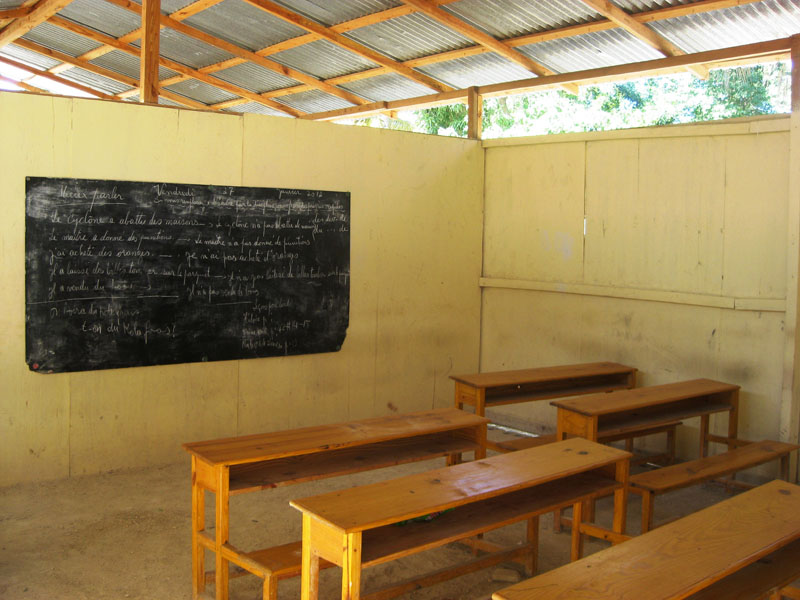
To record the damage to the school, we assess the site parameters and determine if there is rubble to be removed, how many structures have been left standing on site, how much of each building has been damaged due to the earthquake, and if they are able to be improved or need complete demolition. We also take photos of cracks, the roof structure, exterior and interior wall conditions, in addition to taking exterior building dimensions and measurements of every interior room in the building. The job is very thorough and we are to note if the site has toilets, pit latrines, or no toilets at all. Most are without running water or electricity, with concrete block windows and no doors. We take note of everything from natural ventilation, flooring, to the condition of existing furniture and chalkboards.
This first school on our assessment was large and domineering, but once we got a good system going we were able to do a thorough job. Typically, I would run the iPad assessment and input the material into the document, while Alex and Franky (our translator) would sketch and document dimensions of the site and buildings and call them out for me to compile. We felt accomplished as a team for taking on such a large school for our first site.
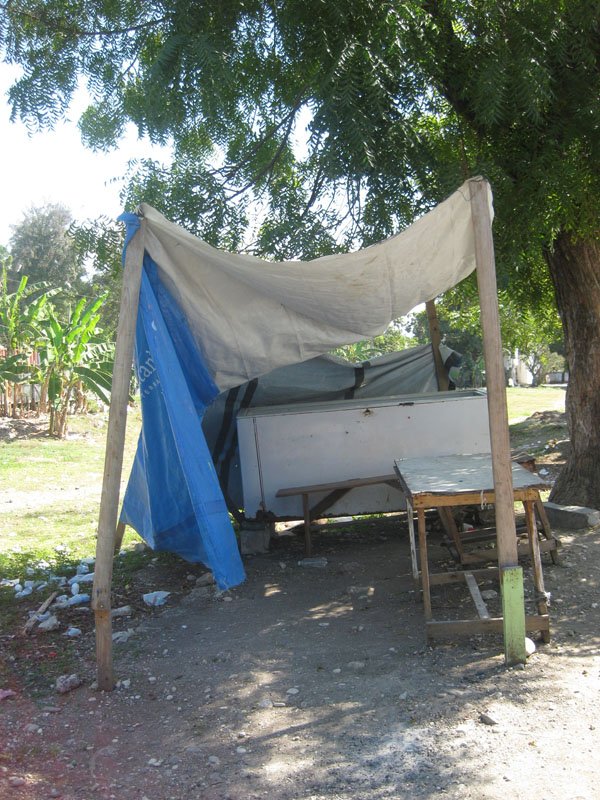
When we finally left Notre Dame de Lourdes, we didn’t have time to make it to the next school before dark, not to mention we were exhausted and hungry. Instead of driving back to Leogane, our leader made arrangements for us to stay overnight at a hotel in Miragoane to continue our work there the next day. The hotel was on the beach, and as we sat on the crumbly, stone steps with our feet in the water, I was able to reflect about the work we had done that day. I was deeply touched by the children at the school. They were so respectful and well-mannered, excited to be learning in their tent structure classrooms. When they were let out for lunch, they immediately ran to me and hugged me and wanted to touch my hands and be smiled at and acknowledged. They knew we were there to help and my soul was bursting to be able to offer them a new school building, not yet knowing that these children actually have a great set-up compared to the schools we would visit in the rural areas the following days.

There is much to share as my eyes have been opened to even more yesterday and today. As we traveled to another school in Miragoane on Tuesday, and then to Jacmel on Wednesday, we have reached three additional schools in the countryside with no classrooms at all, just furniture and sheets, and lucky to have a chalkboard. The men and women in these rural parts of Haiti work so hard just to pay for the simple education their child will receive. Most of them taught by the local parish, we are hoping that through these assessments, the Catholic church will be able to gauge which schools are in most immediate need of new structures so that we can offer to work with them to design new buildings for these communities.

About Xref: Each spring, HMC Architects awards two travel fellowships to meritorious employees to encourage the exploration of other cultures and to strengthen the creative ethos of the firm. All employees, regardless of position, are invited to submit a proposal to go anywhere in the world, describing how that experience would contribute to their personal vision and professional growth. Out of 24 entries received from employees throughout California and Nevada, one of the winners of the 2011 competition was myself. I received a $4,000 travel stipend and an additional week of paid time off to complete my journey to Haiti.


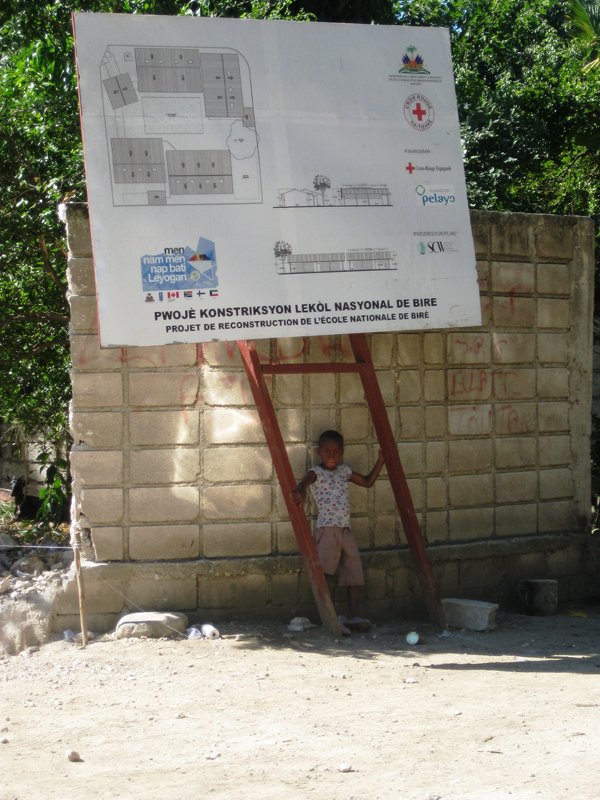
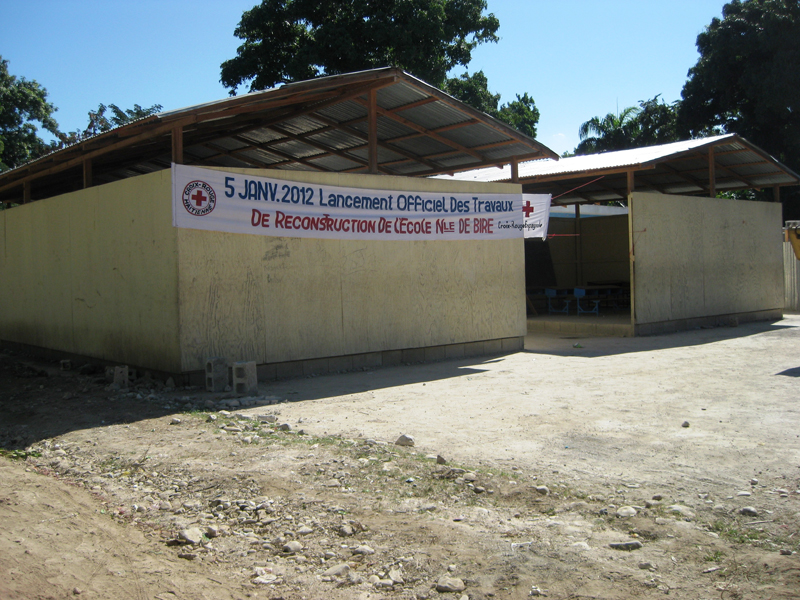
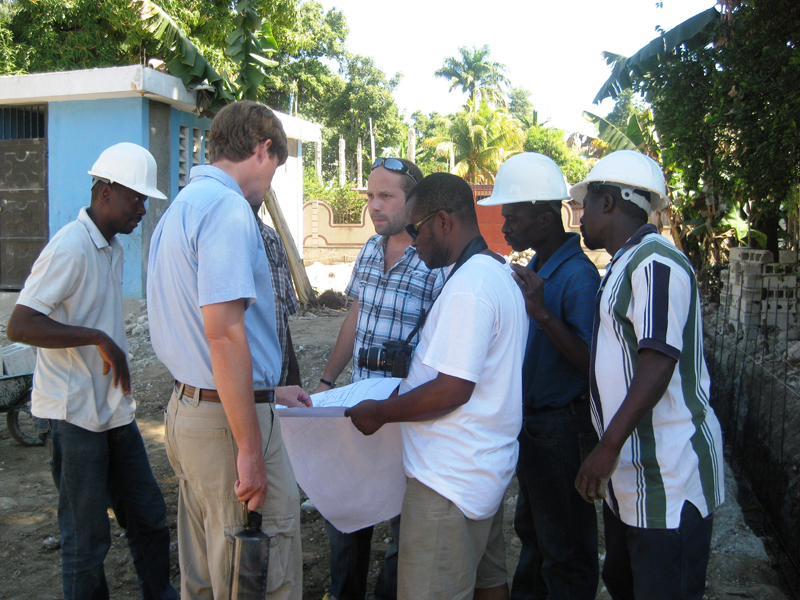

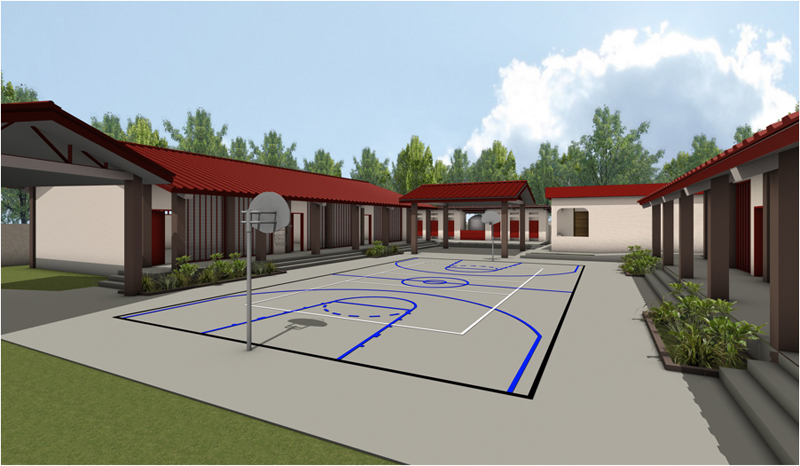
 Lycee de Anacaona de Leogane is the main high school in Leogane with 2,800 students attending in shifts throughout the day. This school was completely demolished during the quake and students are now in temporary buildings that are terribly insufficient. The new school design is two-story and makes much use of the site along with an adjacent soccer field. Throughout the week, I will be helping with drawings to get this project ready for construction.
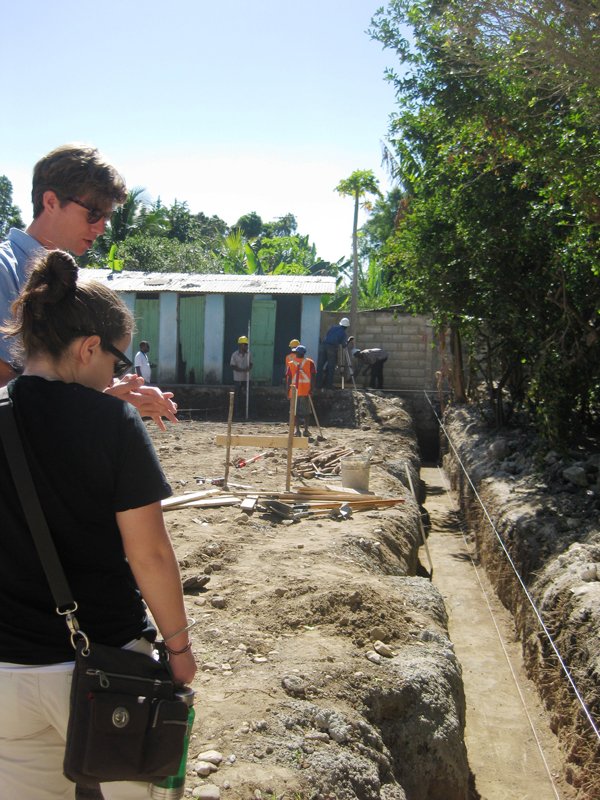
  Our last destination of the day was a school outside Leogane in a rural village high up in the mountains. Ecole National de Leogane Fond de Boudin will be a u-shaped building on a small site with a steep grade. Currently attending tent schools in very poor condition, most children in this area walk to school and are excited to see the progress of their new building. The work that has gone into the site recently was impressive, as it has been excavated entirely by hand. The pits that were dug for the new latrines took ten men a week to dig, whereas with access to a backhoe, the job could have been done in less than thirty minutes.
 At the start of this new year, my arrangements were finalized to take-off for my long-awaited
  kayshadawn